Runway incursions have caused the most serious accidents in the history of aviation. And nevertheless, they keep happening.
Because the human is the ultimate decision maker, and the operator of flight controls, we are always one human error away from another occurrence.
All case studies in this page involve full-time, career aviation professionals (pilots or ATC) who are subject to high standards and exercise their skills every day. And nevertheless, they incurred serious human errors.
If you are a private pilot and fly irregularly, how do you think your mistake rates would compare against theirs?
Runway incursion prevention starts from you – maintaining constant situational awareness, regularly reviewing airport signage and markings, using proper phraseology, being diligent with readbacks, checking for traffic before crossing any runway, and much more.
The most serious accidents in aviation.
A runway incursion is any occurrence involving an aircraft, a vehicle, a person, or an object
that creates a collision hazard
or results in the loss of separation
with an aircraft taking off, landing, or intending to land.
The worst accident in the history of aviation, the 1977 Tenerife disaster was due to a runway incursion, when one aircraft mistakenly initiated a take-off roll without clearance, on a runway that was already occupied.
As recently as in January 2024, another runway incursion (Haneda Airport collision) resulted in the loss of an entire crew when a Coast Guard aircraft mistakenly occupied a runway where a jetliner was landing.

Case study – the January 2020 JFK near miss
On January 20, 2020, Delta flight 300 crossed runway 22R while Delta flight 253 was starting a takeoff roll on the same runway. Fortunately, Delta 253 was able to abort the takeoff and avert a collision.
More in the media.
A causal factor in this near miss was probably a communication confusion, enabled by a tragic coincidence:
- the ground controller instructed DL300 to hold short of runway 22R and asked the pilot about the gate number he expected
- the pilot of DL300 replied with their gate number, which also happened to be 22
- runway and gate number matched, possibly causing communication confusion
- indeed the DL300 pilot believed that he was cleared to cross the runway and that he had read back instructions correctly.
Runway incursions keep happening
On February 26, 2025 at the Midway airport in Chicago, IL, a private jet mistakenly crossed runway 31C while instructed to hold short, as Southwest 2504 was cleared to land on 31C
In the media:
- Southwest jet trying to land at Chicago Midway Airport nearly collides with a private plane on the runway
- Two Planes, in Washington and Chicago, Abort Landings to Avoid Collisions
On October 11, 2024, in San Diego, CA, Southwest 1478 was cleared to take off from runway 27 while Southwest 785 was still crossing the same runway
In the media: Near miss on runway at San Diego International Airport
Preventative Practices
Always Maintain Situational Awareness
Situational awareness is a just convenient shorthand to express prompt, clear knowledge of
- where you are at any point in time
- where you are supposed to be at any point in time according to your clearance and instructions
- where you intend to go and what steps you need to take to reach your destination
- who else is around you, and where they are going, and what their intentions are
ATC assigned taxi instructions include:
- the runway or point to taxi to
- your route
- hold short instructions or
- runway crossing clearances.
Situational awareness is key.
Loss of situational awareness is a clue that you are in danger.
As soon as you recognize that your situational awareness is not complete, stop and act to restore it.
Review airport layouts ahead of time
Safety starts at home, as early as during flight planning time:
- study Airport Diagrams and NOTAMs well before the flight
- annotate Airport Diagrams with closures and abnormalities, such as missing markings or lighting
- update your EFB data – don’t fly with outdated charts
- study the Hot Spots
- check for pre-designated, or standard taxi routes
- materialize and write down the taxi route(s) you expect three times: at the departure airport, at the arrival ariport and at the alternate.
- At the turnout after landing is not the right time to look at the airport diagram for the first time – there is no excuse
- study destination airport at plan time
- consider reviewing again the airport diagram during instrument approach briefing
Learn all airport signage and markings
and know where to expect to find them
Write down taxi instructions
Be prepared to write down ATC taxi instructions
- this helps because memory is faulty: we forget, we make mistakes!
- writing instructions also helps counter expectation bias.
Develop a shorthand notation to write taxi instructions.
You can use ‘X’ to denote crossing, taking advantage of the fact that no taxiway X exists.
Review the route given against the airport diagram – does it make sense?
Do not hesitate to ask ATC again if in doubt.
Study and use proper phraseology
Misunderstandings cause accidents!
Do not allow coincidences (e.g., runway 22 vs gate 22 in the JFK near-miss discussed above) to create confusion.
Readbacks must include runway crossing and hold short instructions
Always read back:
- any instruction to hold short of a specific runway
- any runway assignments
- any clearance to enter a specific runway.
When in doubt, never assume, always request clarifications
Beware of the unique challenges present at untowered fields
At untowered fields:
- You can not count on tower or ground control assistance
- no professional is there to help you maintain awareness of all other traffic – air and ground
- nobody is there corrects your mistakes: you can carry mistakes into the late stages of a flight
(e.g., taking off in the wrong direction and proceeding in that direction)
- You don’t just have to worry about your own mistakes – nobody is there to correct other pilots’ mistakes
- you must guarantee your own separation
- you must watch for other pilots’ mistakes!
- A larger fraction of pilots are not career pilots
- the average level of accuracy and professionalism might be lower
- you might expect less adherence to standard operating procedures
- you might expect airplanes that don’t need to satisfy transponder or ADS-B requirements
- Taxiways are less developed, or could be missing completely, forcing traffic to back-taxi
- be extremely alert and diligent with calls
- especially if you need to back-taxiing on the runway
Best practices
- use the airport diagram to plan your route
- monitor the CTAF and maintain situational awareness always
- announce your intentions on CTAF, early and often
- cross-check the diagram as you move
- when moving, apply right-of-way rules but promptly give way any time it may benefit safety, even if you have right of way.
Turn on exterior lights when taxiing
Keep strobe, position and navigation lights on whenever possible and reasonable.
Use your landing light to signal your intentions to move.
Request progressive taxi instructions if helpful
If at an unfamiliar field or at one with a complex taxiway network, consider asking ATC for progressive instructions.
ATC will assist you one step at a time.
Check for traffic before entering every runway and taxiway
Visually scan for traffic at every intersection.
Visually verify that the runway is clear before initiation your takeoff roll.
When landing, clear the runway soon
Then stop fully and wait for taxi instructions before moving.
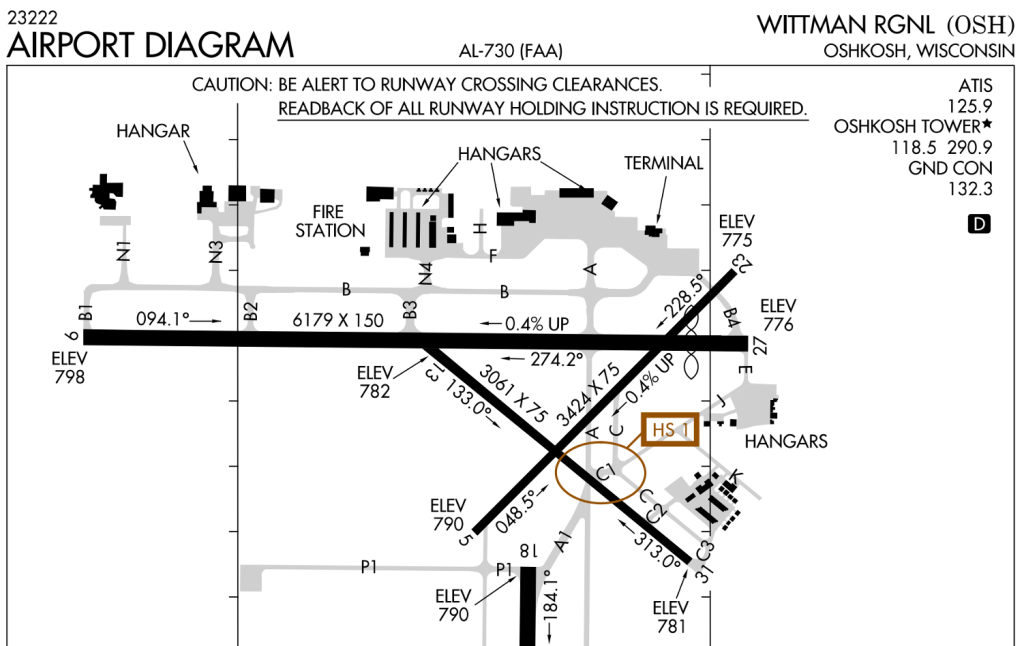
Beware of Hot Spots
Study your Airport diagrams with special attention for hot spots, locations where incidents have occurred in the past and are designated as potentially hazardous aread.
Limit Distractions on the Flight Deck
When taxiing, you should focus primarily on taxiing, at the exclusion of other, non-essential tasks.
Keep all other workload at a minimum.
Avoid any “heads down” work while the plane is moving.
Maintain a “sterile cockpit”, avoiding unnecessary conversation and distractions:
- even better than sterile cockpit, you can adopt a fully cross-checked stream of consciousness:
- say what you are doing, what you are about to do, why
- the other pilots verify the correctness of each steps
- if you have “unruly passengers” (i.e., children), use technology when available, for example intercom isolation:

Raise your standards
Schedule a flight review, a flight refresher or a ground lesson with us today.
Send us a message today at info@independentaviation.training to take the next steps.