Are you a pilot-owner in Westchester County, NY (KHPN), Danbury, CT (KDXR), or in the vicinity?
⠀⠀
Has your instrument currency lapsed for more than six months?
⠀⠀
Email us at info@independentaviation.training to plan today an IPC in your plane, at your field, around your schedule — we’ll answer promptly.
For many instrument rated pilot-owners, their instrument checkride was the last time their instrument proficiency was evaluated against objective standards.
Performing an IPC with us allows you to get an external, objective assessment of your instrument skills, and an opportunity to elevate your standards.
An IPC is not a checkride: it’s a no-stress training opportunity where we collaborate on elevating your standards.
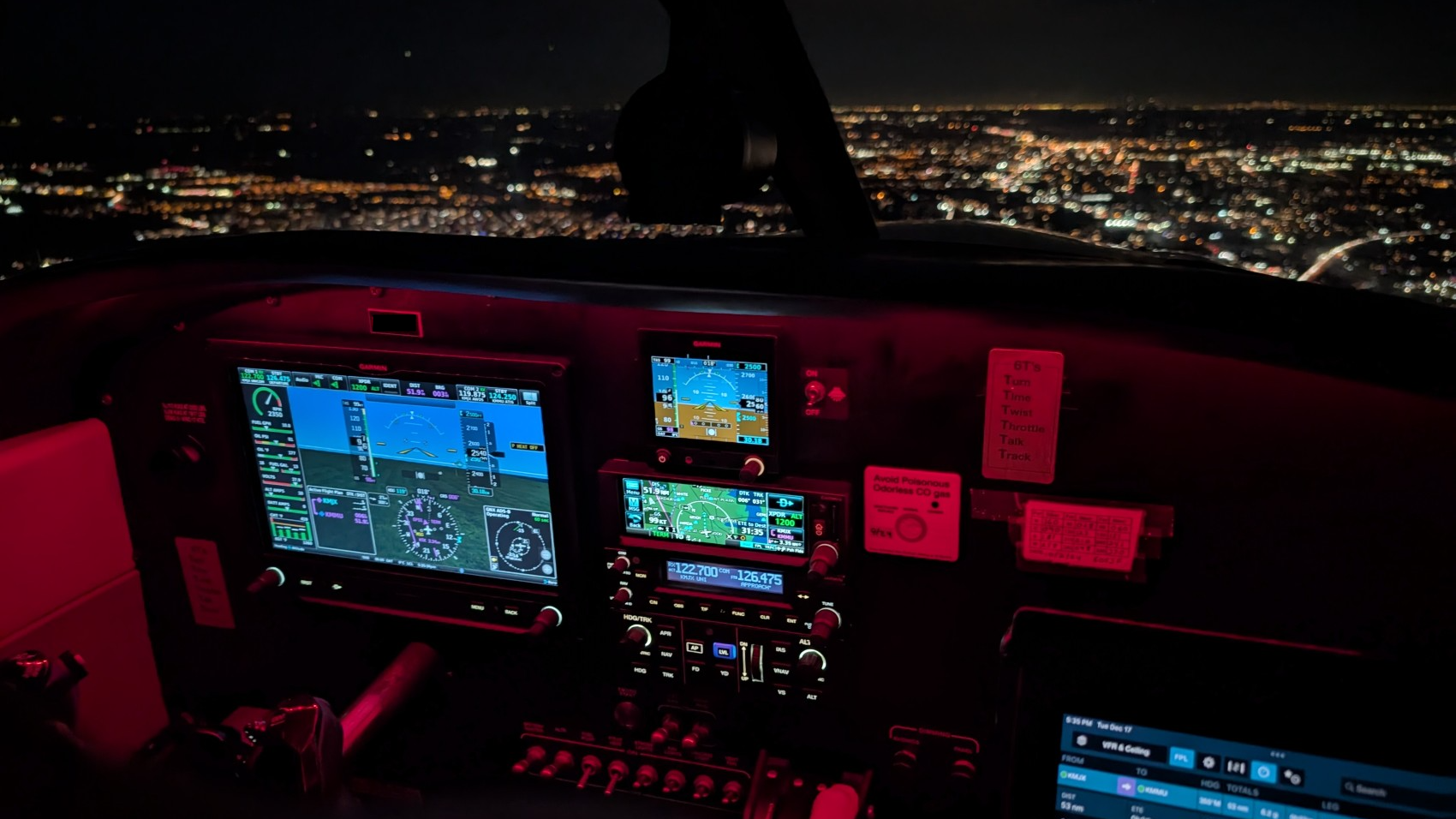
How sharp are your instrument flight skills and knowledge?
- When was the last time you flew a holding procedure?
- Have you recently practiced flying holds by hand?
- Do you remember how to enter a hold?
- When ATC tells you to hold on a radial, does that describe the inbound or outbound course?
- What’s a good holding airspeed in your plane?
- How are you supposed to adjust wind corrections inbound vs. outbound?
- You are flying a hold by hand, while timing it, correcting for wind, and operating the radios – all at the same time. ATC requests you to change altitude while in the hold. Are you comfortable you would be able execute the change, while keeping everything else within standards?
- In your plane, what’s the best use of instruments and controls to enter and maintain a standard rate turn?
- Your planned destination airport forecasts 2 SM visibility at ETA: do you need to elect an alternate?
- Do you remember what are the minimum IFR altitudes in the vicinity of your home airport?
- Is your home airport in mountainous or non-mountainous area? What is the authoritative source determining what regions are mountainous?
- You depart from an untowered airport that has an ODP, but your clearance starts with “Direct XYZ VOR”: are you supposed to fly the ODP?
- You are arriving at your clearance limit and you lose communications. Are you able to articulate what is your required course of actions?
Has your instrument currency lapsed for more than six months?
If you haven’t been instrument current for six months or more, 14 CFR 61.57(d) requires that you take an Instrument Proficiency Check (IPC) with an authorized CFII before you can fly under IFR rules again.
It is realistic to expect an IPC to include 2-3 hours of ground instruction and 2-3 hours of flight instruction as well.
A successful IPC concludes with a logbook endorsement that restores your IFR PIC currency.
Refresh your Knowledge
The ground portion of our IPCs is designed to help you regain the Instrument Flight knowledge that you might have lost over the years, and bring you up to date with the most relevant safety special-emphasis areas.
Even current and proficient instrument pilots regularly exercise only a small portion of the tasks that ATC could ask you to perform, at any time, when flying IFR in the national airspace system.
Are you ready?
Proficiency in Hand Flying
Avionics are becoming more and more advanced every year, but over-reliance on automation can cause complacency, degradation of manual flying skills and, ultimately, accidents.
Lack of proficiency in manual flight after automation failure is a recognized hazard.
Are you comfortable you can continue safely by hand at any stage of the flight?
Partial Panel Skills
Even highly redundant equipment can experience multiple failures.
Nevertheless, for many instrument pilots, the last time they practiced partial panel procedures was in preparation for their instrument checkride. That can easily be years ago.
Are you comfortable you would be able to continue your flight and complete an instrument approach within standards if you lost your gyroscopic instruments?
The Confidence to Fly in Busy Airspace
Real-world IFR flying in the class Bravo airspace over the NYC metropolitan area is significantly different from the typical training in preparation for an IFR checkride: frequencies are busy, rhythms are fast paced, dealing with ATC requests demands a spotless level of professionalism.
Are you confident you can interact with ATC promptly and accurately, at the rhythms that the NY Bravo requires?
Tailored to Your Real-World Needs
The regulations give the CFII a certain amount of freedom in selecting, for each IPC, a menu of tasks that matter the most for the real kind of flying the pilot performs.
Let’s discuss together a plan of action for your IPC that emphasizes those tasks that will make you a safer, more proficient, more comfortable pilot in the specific type of flying you normally do.
